How a Small-Scale Coffee Farmer from Inzá, Cauca, Takes on the Giants
Observaciones desde el terreno: clima, cosecha en curso, el día a día de Inzá.
Field Notes · 4 min read
In 2019, Wilfredo Rivera came second in the Best Coffee in Cauca competition, competing against farms ten times the size of his own.
In 2019, a coffee farmer with just 2 hectares competed against farms spanning more than 50 hectares, equipped with cutting-edge technology and their own marketing teams, in the Best Coffee in Cauca competition.
He came in second place.
His name is Wilfredo Rivera, from the Indigenous Reservation of Yaquivá, in the El Mangón sector..
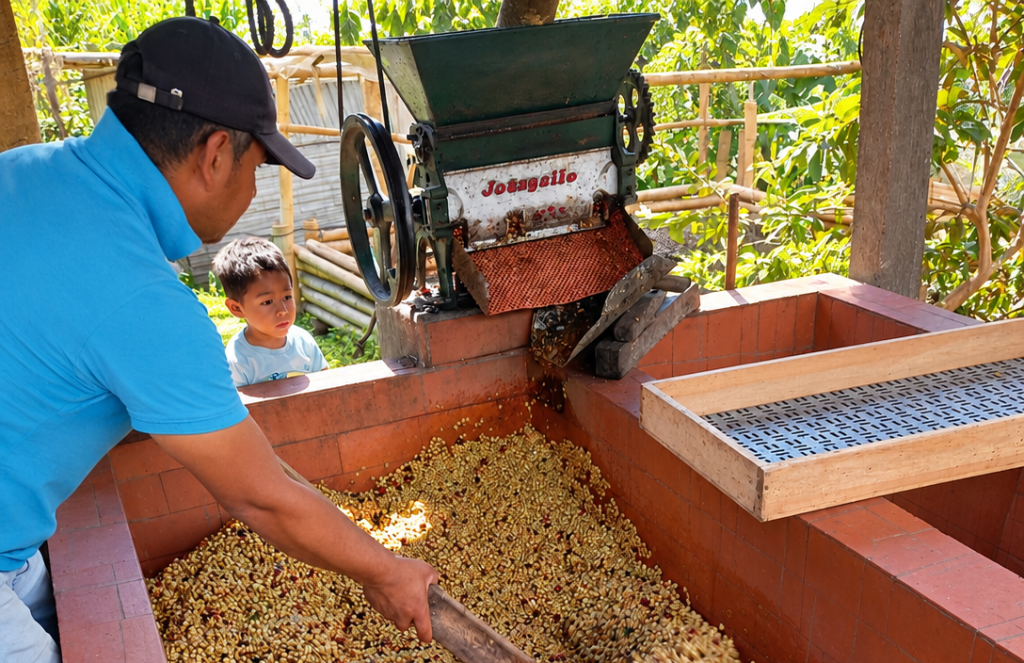
His process, like that of most coffee farmers in Inzá, is washed. His cultivation and processing are vibrant with life. It is hands-on work, carried out in the same cement tank where his father, Libardo, taught him — and where he now teaches his own son.
He has no laboratory.
No dedicated sales team or marketing budget.
No advanced machinery to match the technology used by larger farms.
But he has something no budget can buy: artistry.
The problem isn’t quality. It’s structural.
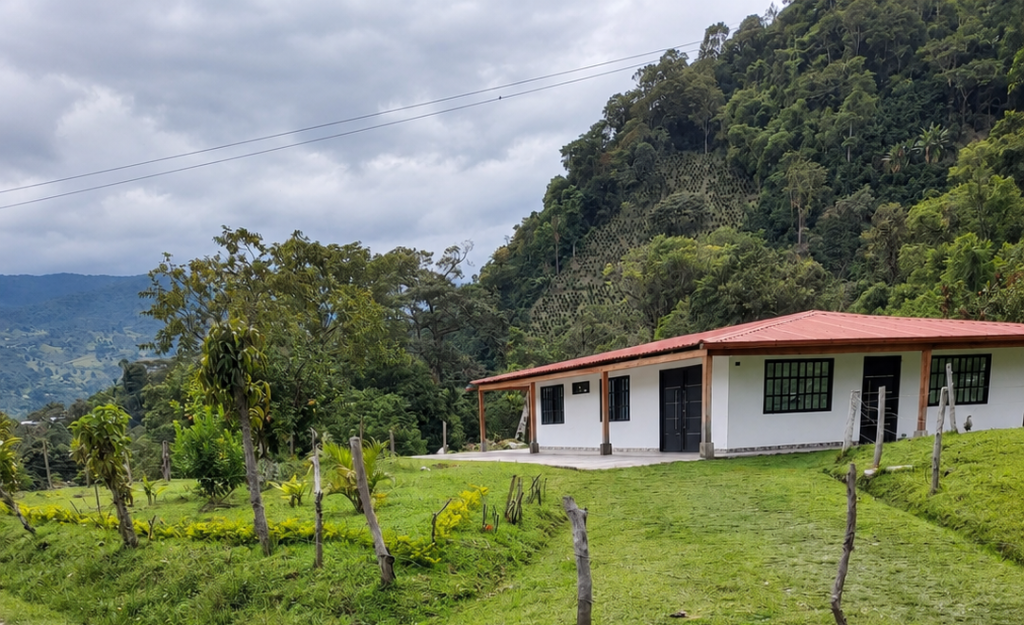
A small farm doesn’t have a cupping lab, a marketing team, or even the means to travel to trade fairs. Under these circumstances, building a direct relationship with a roaster on another continent is nothing short of a miracle.
That infrastructure costs just as much for a small producer as it does for a large one. But the small producer sells only a fraction of the volume to cover those costs.
This is a recurring reality in Inzá and across many parts of the country: coffee farmers produce exceptional coffee, only to end up selling it at the same price as their neighbour’s commodity-grade coffee. This mismatch — exceptional quality sold at commodity prices — undervalues the product and, ultimately, undermines the producer behind it.
The quality is there. What’s missing is someone to support it, measure it, and communicate its value.
What there is no shortage of are fly-by-night exporters and middlemen who take advantage of this harsh reality.
Not even the cooperative that organized the competition followed up or provided any further support.
That’s exactly what happened to Wilfredo in 2019. He won the argument, but lost the business. The buyer who eventually purchased his coffee bought it just once — and never came back.
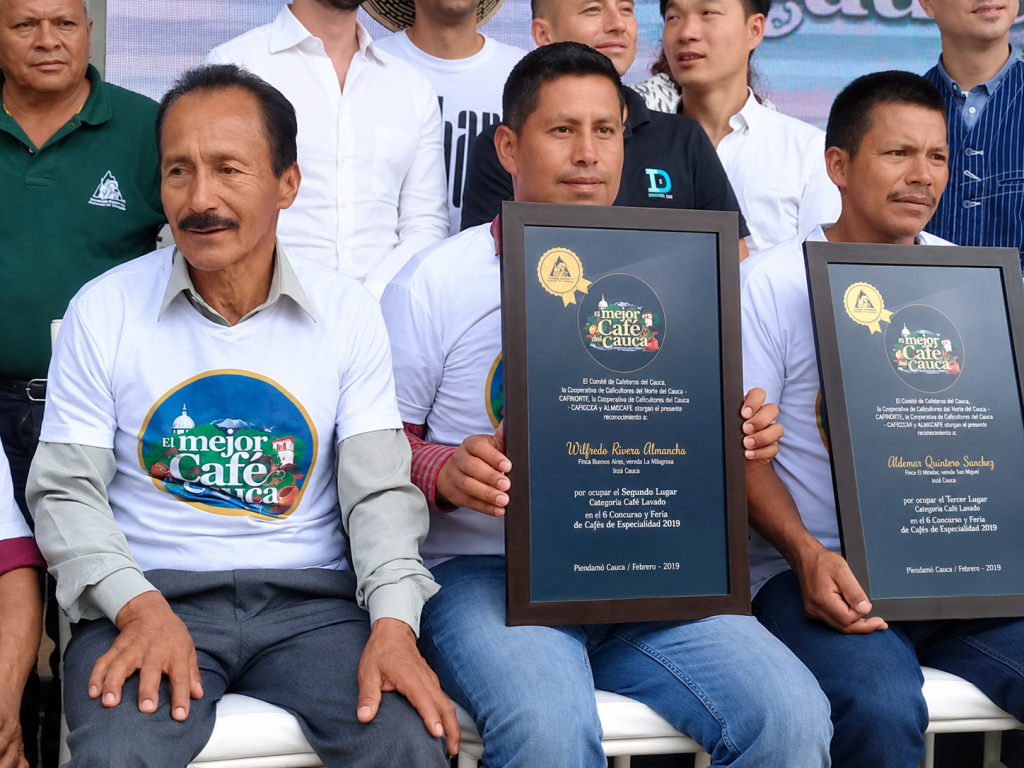
We weren’t there yet to stand behind him.
An exporter with principles, at origin.
At O&O, we call Wilfredo and many others like him Master Growers: small-scale coffee farmers who achieve excellence despite financial, infrastructure, and resource constraints.
And now, we help unlock its full potential.
Our work is built on responsible, long-term collaboration.
We provide the infrastructure that our group of small farms cannot afford on their own: a dedicated team for quality control, technical assistance, experimentation and technology, marketing, and logistics.
Our goal is to provide what was missing for Wilfredo to move beyond a second-place finish in a competition and secure a real contract with a roaster.
To be what Wilfredo was missing.
Wilfredo and his father, Libardo Rivera, now have a 60-bag microlot in our warehouse, ready for purchase. Alongside it are a Pink Bourbon varietal lot from several producers, a Caturra lot from Patricio Guegue, and another from Hernan Rivera.
The question we ask ourselves at O&O is not whether there are coffee farmers of this calibre in Inzá.
The question is how many more Wilfredos are out there, quietly producing exceptional coffee while the market only sees what lies on the surface —
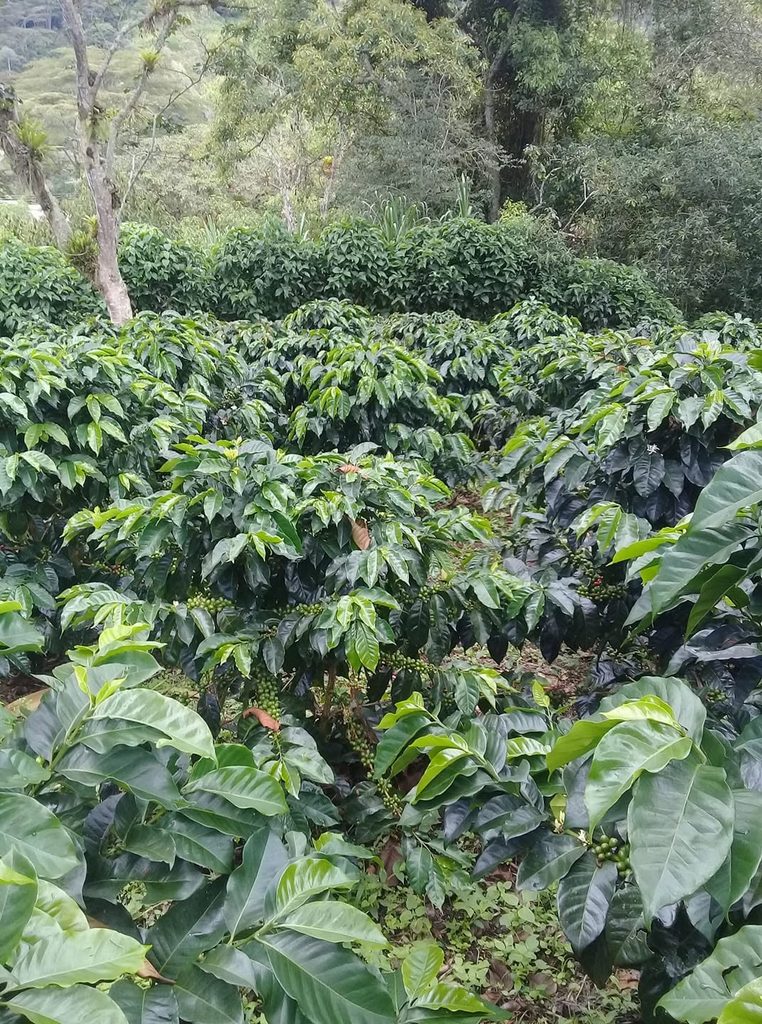
You and I both know that, all too often, these stories end up as little more than beautiful photographs, or the spotlight is placed on the largest farms — which, of course, produce excellent coffee too. But what about the small-scale producer?
We also know that specialty coffee consumers want their purchases to make a difference. There’s evidence of this in the way so much of the marketing focuses on these themes: supporting producers, sustainability, certifications, and labels of all kinds.
How good would it be to make sure that this impact is real? And to take it one step further.